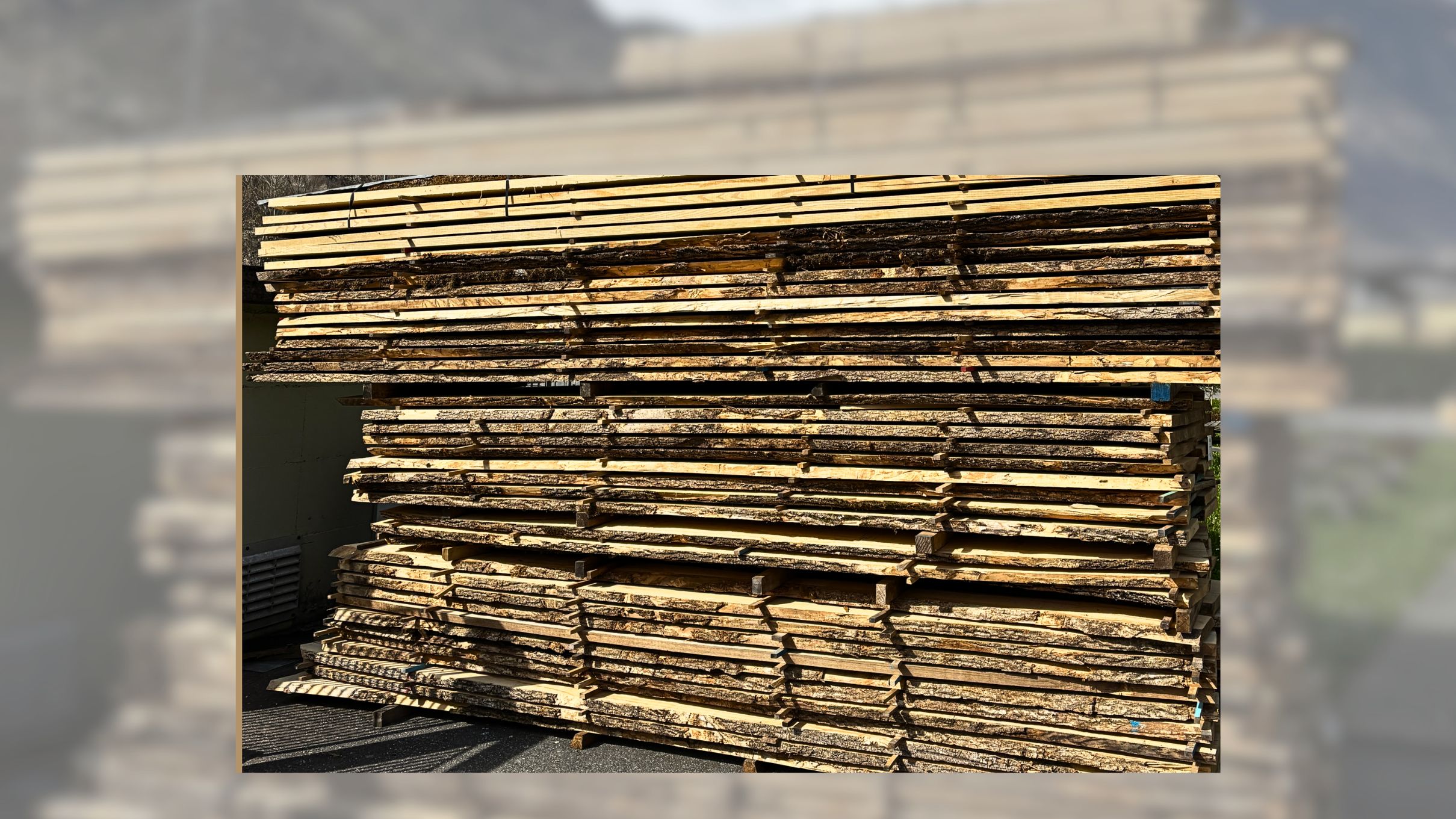
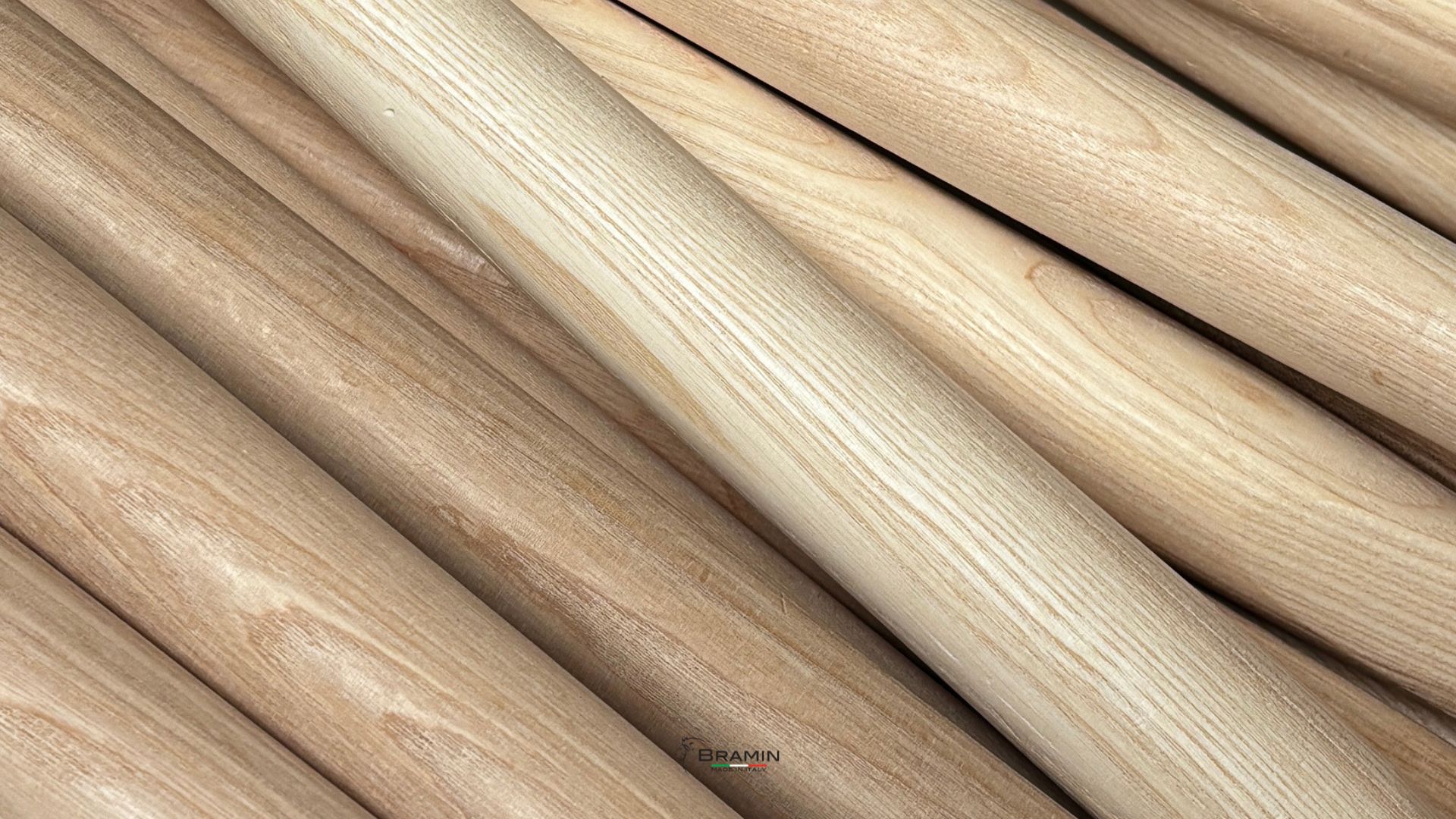
Wooden handles production in Europe: what is happening to ash wood
Wooden handles production in Europe is undergoing a period of significant change. Ash wood, long considered the benchmark material for professional tools in gardening, agriculture, and construction, is now at the center of a phytosanitary crisis that is reshaping the entire supply chain.
Today, its availability is no longer as guaranteed as in the past. Across Europe, companies and industry operators are facing a scenario where supply, wood quality, and costs are no longer stable variables, but factors that require careful management.
For manufacturers of shovel handles, hoe handles, and pickaxe handles, this means making strategic decisions regarding materials, processes, and market positioning.
The role of ash wood in wooden handles production
For decades, ash has represented a quality standard that is difficult to match in wooden handles production.
Its combination of mechanical strength and elasticity makes it ideal for producing handles designed to withstand intense and repeated stress. In practical terms, this translates into a natural ability to absorb shocks, reducing strain for the user and improving safety during use.
At the same time, its long and compact fibrous structure reduces the risk of breakage, even under demanding working conditions.
For this reason, ash has historically been used for:
- shovel handles
- hoe handles
- pickaxe handles
Even today, it remains the benchmark material for many wooden handles manufacturers.
Ash wood crisis in Europe
In recent years, the spread of the fungus Hymenoscyphus fraxineus has significantly affected European forests.
What initially appeared to be a localized issue has gradually spread across much of the continent.
In Central and Northern Europe, the impact has been particularly severe, with a drastic reduction in the availability of healthy trees. In Southern regions, the situation is more variable but still evolving and closely monitored.
The consequences for the sector are already clear:
- reduced availability of raw material
- less consistent wood quality
- increased costs across the entire supply chain
The result is growing pressure on wooden handles production.
Direct impact on shovel, hoe and pickaxe handles
For companies in the sector, this scenario has immediate and tangible effects, especially in professional applications.
Supply chain under pressure
Sourcing has become more complex:
- less ash wood available
- increased competition among buyers
- longer lead times to obtain suitable material
Less consistent quality
Quality now requires greater attention than in the past. The material may show:
- internal defects
- increased fragility
- variability between batches
Rising costs
The increase in raw material prices directly affects margins, particularly for:
- shovel handles
- hoe handles
- pickaxe handles
In these products, strength and reliability are essential, making material management even more critical.
Wooden handles production: strategies to face the change
In this context, more structured companies are adopting targeted strategies to ensure production continuity and maintain high quality standards.
Raw material diversification
Alongside ash wood, there is increasing use of:
- European beech
- hickory (imported)
- selected alternative hardwoods
This approach reduces dependence on a single raw material.
Direct control of the supply chain
It is becoming increasingly important to:
- collaborate with selected sawmills
- select timber at the source
- adopt certifications such as FSC and PEFC
This ensures higher quality, traceability, and reliability.
Production process optimization
Companies are focusing on:
- better use of wood
- waste reduction
- quality standardization
This allows them to remain competitive even in a context of rising costs.
Quality-driven market positioning
Companies that clearly communicate:
- product quality
- wood origin
- sustainability
are building a stronger and more distinctive position in the European market.
The future of ash wood and the sector
Despite current challenges, ash wood is not destined to disappear.
Forestry research is working on developing more resistant varieties, while the entire supply chain is adapting to manage available resources more efficiently.
For wooden handles production, this means evolution, not decline.
A forward-looking commitment
In this constantly evolving scenario, our company continues to invest in raw material selection and direct control of the supply chain, with the aim of ensuring reliable and high-performance wooden handles.
Our experience allows us to face market changes while maintaining high quality standards, without losing sight of what truly matters: safety, durability, and comfort for those who use our products every day.
Conclusion
Wooden handles production in Europe is going through a transition phase.
Companies that are able to adapt, diversify, and strengthen supply chain control will not only overcome current challenges, but also seize new growth opportunities in a market increasingly focused on quality and sustainability.